
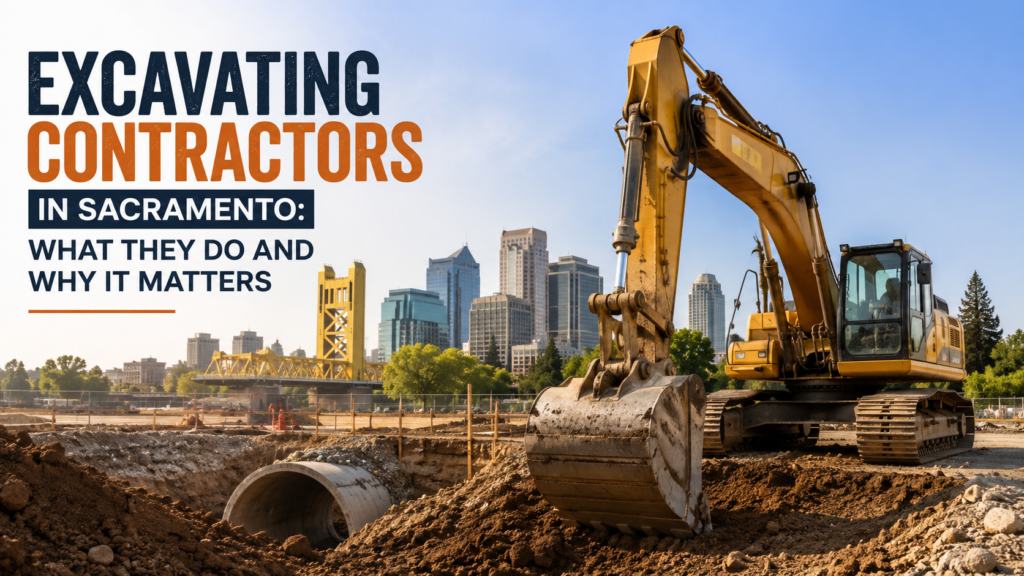
Before any foundation is poured, utility is installed, or structure rises from the ground, an excavating contractor has typically done the critical preparatory work that makes it all possible. In Sacramento and the surrounding Northern California region, excavation contractors are indispensable to residential, commercial, and municipal construction alike. This guide explores what Excavating Contractor Sacramento actually do, the services they offer, and why their expertise is fundamental to any serious ground-level project.
What Is an Excavating Contractor?
An excavating contractor is a specialist in earthmoving the controlled removal, relocation, and management of soil, rock, and other ground materials to prepare a site for construction or development. Unlike general contractors who oversee a broad range of construction activity, excavating contractors focus specifically on the ground itself: how it needs to be shaped, stabilized, removed, or built up to support whatever comes next.
In Sacramento, excavating contractors serve an enormous range of clients. Homeowners hire them to dig foundations for new homes, install drainage systems, or prepare pads for additions. Developers rely on them to clear and grade large commercial lots. Municipalities contract them for road grading, utility trenching, and stormwater infrastructure. Agricultural landowners in the Sacramento Valley use their services for pond construction, irrigation preparation, and land leveling.
Core Excavation Services Offered in Sacramento
Site preparation and grading is the foundational service most excavating contractors provide. This involves removing the existing topsoil and organic material from a building footprint, shaping the ground surface to the correct elevation and slope specified by the project engineer, and compacting the subgrade to create a stable base. Proper grading is essential both for structural integrity and for directing water drainage away from buildings a critical consideration in Sacramento where seasonal rainfall and clay soils can create significant moisture management challenges.
Foundation excavation involves digging to the precise depth and footprint required for a building’s foundation system. The depth depends on soil conditions, frost requirements (less relevant in Sacramento’s mild climate but still a consideration in foothill areas), and the structural engineering specifications for the building. Excavators must understand how to stage excavated soil, protect the open cut from erosion, and coordinate with concrete crews for timely foundation pours.
Utility trenching is another major service. Water lines, sewer pipes, electrical conduits, and gas lines all travel underground, and their installation requires precise trenching to the specified depth and width. In Sacramento and surrounding areas, different utilities have different depth requirements water supply lines typically sit deeper than electrical or communication cables and excavators must follow these specifications exactly to ensure safe, code-compliant installations.
Land preparation and lot clearing covers the broader site work that precedes foundation excavation on raw or undeveloped parcels. This includes removing trees and stumps, clearing brush and vegetation, stripping topsoil, rough grading the entire parcel, and bringing in fill material where needed to achieve desired elevations. Sacramento’s foothills and valley floor present different terrain challenges, and experienced excavating contractors understand how to work effectively across both environments.
Drainage system installation addresses one of Sacramento’s most significant site engineering challenges. The region’s heavy clay soils have low permeability, and improper drainage can lead to foundation saturation, landscape erosion, and flooding. Excavating contractors install French drains, retention basins, swales, and other stormwater management systems that protect properties from water damage over the long term.
Equipment Used by Sacramento Excavating Contractors
The machinery an excavating contractor deploys depends heavily on the scale and nature of the project. Mini excavators, typically in the 5-to-10-ton range, are workhorses for tight residential sites where access is limited and precision matters. Their compact size allows them to work in backyards, along building foundations, and in areas where larger equipment simply cannot fit.
Full-size excavators ranging from 20 to 50 tons or more are deployed for commercial sites, large residential developments, and any project requiring significant earthmoving volume. These machines can be fitted with a variety of attachments standard buckets, rock-breaking hammers, thumb grabs, compaction plates making them versatile across different ground conditions and tasks.
Backhoes combine a loader bucket on the front with a digging arm on the rear, making them particularly useful for trenching and utility installation where materials need to be moved as well as soil excavated. Skid steer loaders with bucket attachments handle material loading and site cleanup efficiently. Bulldozers and motor graders are used for rough and finish grading on larger sites, pushing material across the ground surface to achieve the specified contours and slopes.
Sacramento-Specific Considerations for Excavation
Sacramento’s geology presents some distinctive challenges for excavating contractors. The valley floor is characterized by deep alluvial soils layers of silt, clay, and sand deposited over millennia by the Sacramento and American rivers. These soils can be highly expansive, meaning they swell when wet and shrink when dry, which affects foundation design and subgrade preparation requirements.
In the foothill communities east of Sacramento El Dorado Hills, Folsom, Loomis, and beyond contractors frequently encounter harder rock formations that require different equipment and techniques than valley floor work. Some foothill sites require excavation through decomposed granite or harder bedrock, which may call for hydraulic breakers or even blasting under appropriate permits.
The Sacramento region also has a complex network of underground utilities, including both active and legacy infrastructure from decades of urban development. Before excavation begins, California law requires contractors to contact Underground Service Alert (811) to identify and mark buried utilities, preventing accidental strikes that can cause dangerous outages, environmental incidents, and project delays.
Permits and Regulations for Excavation in Sacramento
Grading and excavation projects in Sacramento County typically require grading permits when work involves significant cut or fill quantities, slopes, or proximity to drainage features. The permit process ensures that proposed grading plans meet engineering and environmental standards, protecting both the project site and neighboring properties from adverse effects.
Projects in environmentally sensitive areas near waterways, wetlands, or designated habitat zones may require additional review under the California Environmental Quality Act (CEQA) or local ordinances. Excavating contractors with experience in the Sacramento region are familiar with these permitting pathways and can help owners navigate the regulatory requirements efficiently.
Frequently Asked Questions About Excavating Contractors in Sacramento
How deep can a residential excavation go without special requirements? Depth requirements vary by project type and location, but most standard residential foundation excavations fall in a range that does not require special permits beyond a standard grading or building permit. Deeper excavations particularly for basements, underground utilities, or significant earthworks may require engineering oversight and additional permitting.
How long does a typical excavation project take in Sacramento? Project duration varies widely. A small residential drainage correction might be completed in a single day. A full site preparation for a new commercial building could take several weeks. Timeline depends on site size, soil conditions, equipment used, and the complexity of the work required.
Do excavating contractors handle debris removal? Yes. Hauling excavated soil and debris is a standard part of excavation services. Contractors either haul material off site to disposal or fill locations, or stockpile it on site for reuse elsewhere on the project. In Sacramento, imported fill material can also be arranged when needed to bring areas up to grade.